
Once the excitement of summer vacation wears off, working parents face a familiar puzzle. You need dependable child care while you are at work, but you also want your child to stay active, make friends, and avoid spending two months glued to screens.
While traditional daycare works well for toddlers, older kids quickly outgrow quiet indoor rooms. Enrolling in a martial arts summer camp in Kingston, NY bridges that gap, giving school-age children a chance to burn energy constructively, learn real skills, and build focus on the mats. Here is an honest comparison to help you choose the right fit for your family.
What Is the Difference Between Traditional Daycare and a Martial Arts Summer Camp?
The main difference comes down to daily purpose. Daycare centers focus on custodial supervision: keeping children safe, fed, and occupied through free play, crafts, and quiet hours. While helpful for toddlers, it rarely challenges older kids.
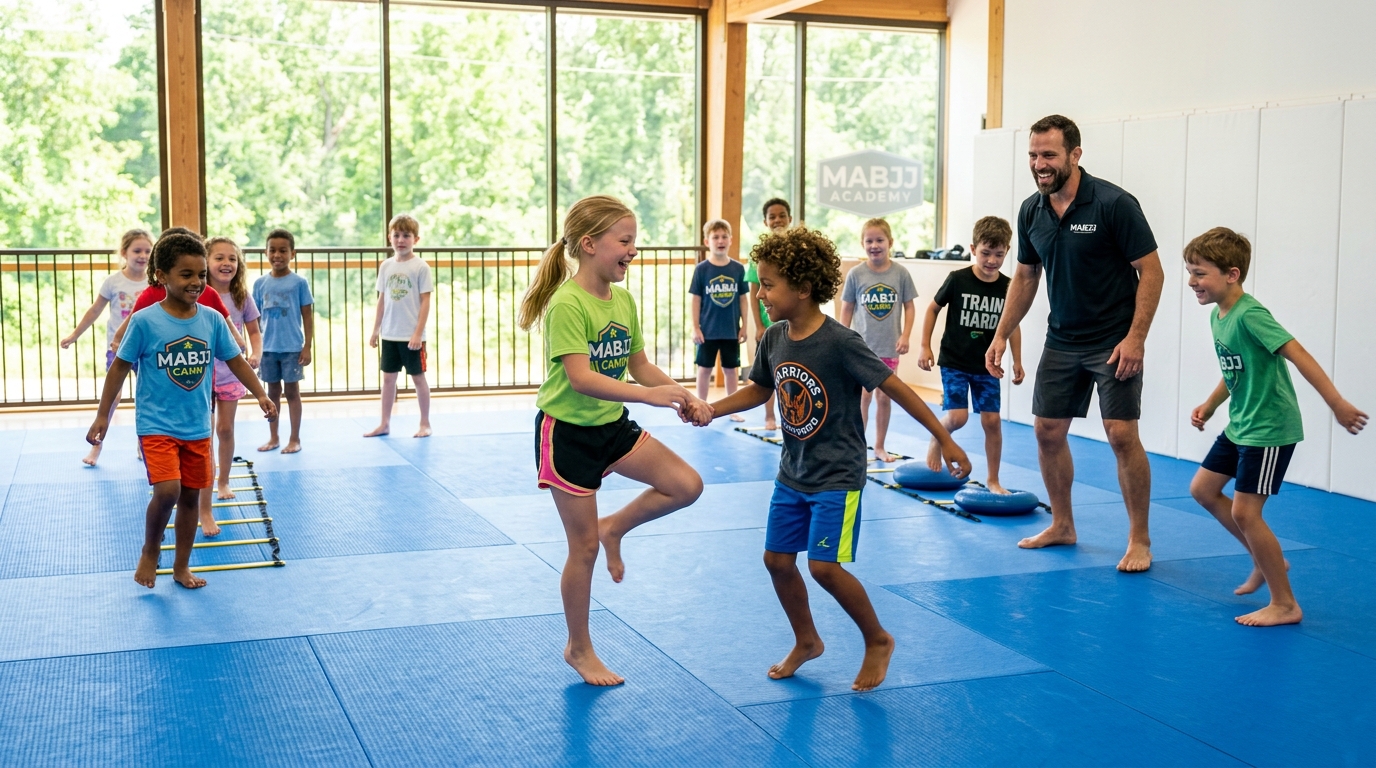
A martial arts camp pairs dependable coverage with active learning. Instead of simply passing time, children learn martial arts basics, navigate obstacle courses, and practice focus, respect, and patience.
Custodial Care vs. Skill-Based Mentorship
- Daycare staff: Aides manage group routines, prevent playground disputes, and monitor play areas.
- Martial arts coaches: Experienced adult instructors lead guided classes, break down techniques step by step, and teach self-discipline, balance, and body control.
Why School-Age Children Outgrow Daycare
Kids between ages 5 and 12 naturally seek physical mastery and clear goals. In mixed-age daycare rooms alongside toddlers, school-age children often become restless or bored by the lack of space to run.
That need for purposeful movement is why so many parents look beyond standard babysitting. Whether you live in town or are commuting to a BJJ summer camp from Lake Katrine down Route 9W, our academy on Wall Street gives kids an environment where they leave each afternoon pleasantly tired, proud of their effort, and excited to show you a new movement they mastered.
How Do Daily Schedules and Screen-Time Policies Compare?
A common summer challenge is rising screen time. In daycare centers, managing energetic school-age kids during afternoon lulls often leads to movies or tablets to keep rooms quiet.
Martial arts camps take a different approach. Days are divided into structured blocks that keep children active and engaged, with a strict screen-free policy from drop-off to pickup.
Understanding the Structured Days Hypothesis
Child development research confirms that children face setbacks when summer lacks routine. The Structured Days Hypothesis in the International Journal of Behavioral Nutrition and Physical Activity shows that without school structure, activity drops while screen time spikes.
A martial arts camp restores that healthy balance. Through our youth summer camp, Brazilian Jiu-Jitsu in Kingston gives kids a constructive outlet to learn balance, body mechanics, and leverage without strikes. They burn off energy safely and stay engaged all week long.
Daily Structure: Daycare vs. Martial Arts Camp
| Feature | Traditional Daycare | Martial Arts Summer Camp |
|---|---|---|
| Focus | General supervision and free play | Coached movement, character, and self-defense |
| Activity | 30 to 60 minutes of playground time | 2 to 3 hours of guided agility, games, and drills |
| Screens | Tablets and movies used during downtime | Strictly screen-free from drop-off to pickup |
| Staff | Daycare workers and seasonal aides | Dedicated adult martial arts coaches |
| Social | Free-form play with minimal coaching | Cooperative partner drills teaching respect |
| Best Age | Infants, toddlers, and young preschoolers | Active school-age children (ages 5 to 12) |
How Does Martial Arts Prevent the Summer Slide in Behavior and Focus?
While the summer slide usually refers to academic loss, elementary teachers across Ulster County know the behavioral slide is often the bigger hurdle in September.
After weeks of late bedtimes and zero structure, sitting quietly at a desk feels jarring. Children struggle with focus, listening, and managing frustration.
Training Executive Function and Emotional Regulation
Martial arts directly strengthens self-regulation. Research in Frontiers in Behavioral Neuroscience shows that structured martial arts training boosts executive function, working memory, and emotional control in children.
On the mats, solving physical puzzles teaches kids to stay composed under pressure:
- Attentive listening: Children learn to look directly at the coach and listen to full instructions before beginning an activity.
- Mutual respect: Every practice round starts and finishes with a handshake or high-five, teaching kids to respect training partners.
- Resilience: Kids discover that making a mistake during a drill is simply feedback, helping them handle setbacks with less anxiety.
- Personal accountability: Learning to line up shoes, keep gear organized, and care for the mats builds pride in their environment.
Is a Martial Arts Summer Camp Safe for Kids with Zero Experience?
If you are researching a martial arts summer camp in Kingston, NY for the first time, it is natural to wonder whether the training will be too intense or rough for a beginner.
Youth Brazilian Jiu-Jitsu is fundamentally different from standard striking martial arts:
- There are zero punches, kicks, or strikes in our youth curriculum.
- Children learn how to protect their personal space, break falls safely, and escape holds without hurting anyone.
- Class time uses playful movement drills like animal walks, balance relays, and cooperative partner games.
- Live grappling is introduced gradually, carefully, and always under direct adult supervision.
At Ascended BJJ and Boxing, our mats are sanitized daily to high standards at 307 Wall Street. Led by Owner Pedro Marques, our coaches keep groups small and match partners by age and size so cautious kids feel welcomed right away.
How Should Kingston and Lake Katrine Parents Choose Between Camp and Daycare?
The right choice depends on your child's age, personality, and family routine:
1. Choose Traditional Daycare If:
- Your child is under age 5 and needs scheduled afternoon naps.
- Your child prefers solitary, quiet indoor play over group movement.
2. Choose a Martial Arts Summer Camp If:
- Your child is between ages 5 and 12 and has outgrown daycare rooms.
- You want full-day care that keeps your child active and off screens.
- Your child has energy to burn and wants to build focus for school.
For families comparing child care options or looking into a BJJ summer camp near Lake Katrine, Hurley, or Saugerties, the biggest advantage is community. Kids gain a sense of belonging and athletic confidence that standard daycare rooms cannot match. You can also explore our year-round kids martial arts classes to see how our coaches guide children during the school year.
Give Your Child an Active, Purposeful Summer in Kingston
Summer break should be a memorable season of laughter, active movement, and earned confidence, not ten weeks spent on the couch staring at screens.
At Ascended BJJ and Boxing, our summer camp gives working parents peace of mind while helping kids build physical skills, self-respect, and lasting friendships.
Enrolling your child in a summer camp with Brazilian Jiu-Jitsu in Kingston provides an active, screen-free break with positive adult mentors. Learn more about our experienced coaches and core values at our academy in historic Uptown Kingston. Ready to plan a rewarding summer? Call 845-853-0336 or visit us at 307 Wall Street in Kingston, NY, to schedule a free trial session and see our community in action.
FAQs
No. Most campers are complete beginners. Our coaches introduce every movement step by step in a patient, welcoming setting.
Our camp schedule fits standard workdays, offering convenient morning drop-off and afternoon pickup windows.
No. Structured martial arts teaches self-restraint and emotional composure, showing children that true strength comes from staying calm.
Campers wear shorts and a T-shirt. Please pack a refillable water bottle, lunch, and two snacks.
Campers are grouped by age and developmental stage, matching our Juniors (ages 4 to 6) and Kids (ages 7 to 10) structures for safety.
Because we cap attendance to maintain low coach-to-student ratios, spots fill quickly. We recommend reserving early to secure your dates.